
Dynamic Intefaces..
A practical proposal for using identity, permissions, source data, search, and AI to build dashboards that adapt to the person and task.
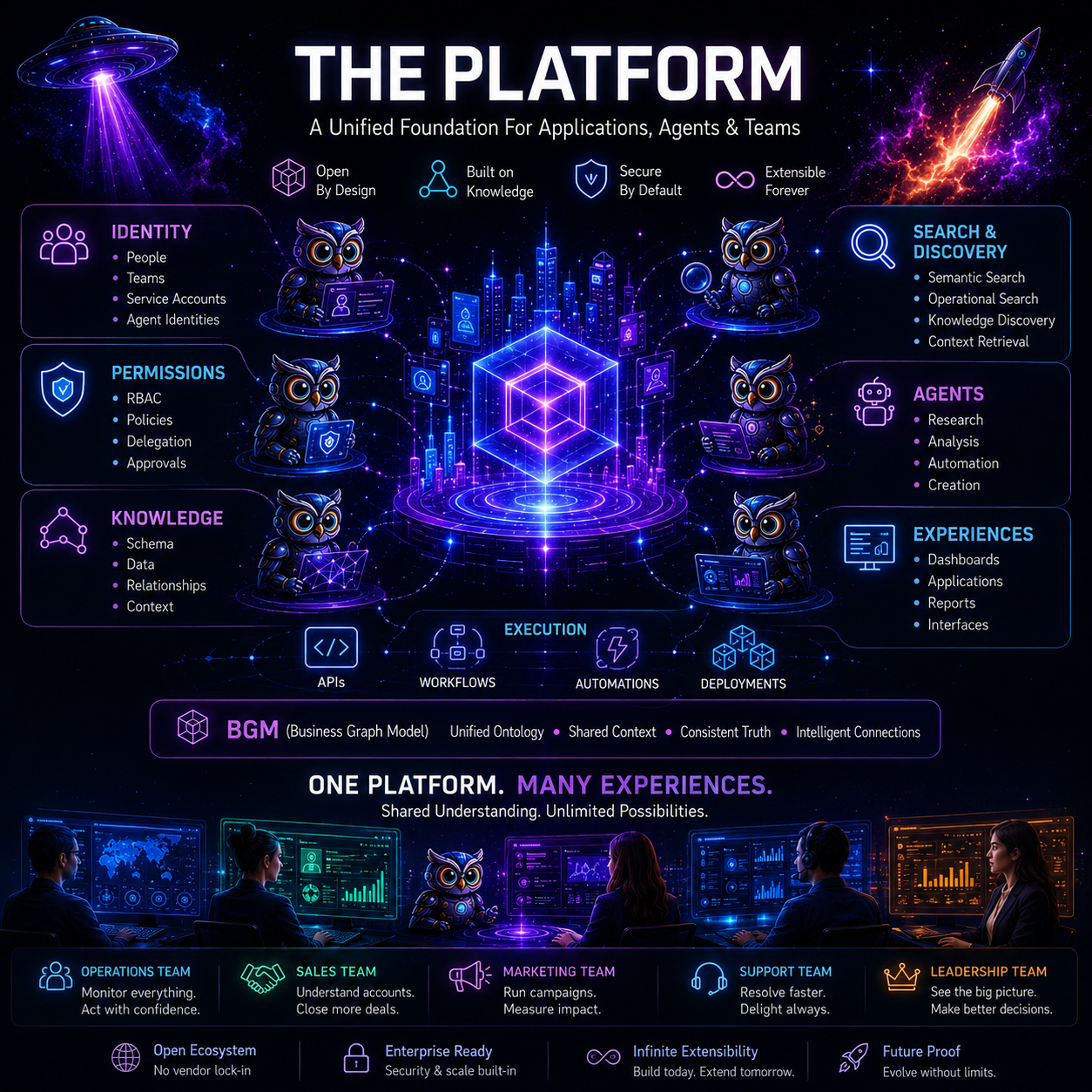
Operational relevance
Information For You.
Useful interfaces need identity, permissions, context, relationships, and intent.
A good dashboard is not just a charting problem.
The system has to know what the user is allowed to see, how data points connect, and which view will help them act.
Why now, why not yet
The tools exist. The hard part is context.
We already have identity systems, databases, workflow tools, search, and model access. The challenge is connecting them in a way that understands the work, the user, and the limits around the data.
Operational data is split across tools that rarely explain how records relate.
Dashboards often show one fixed view, even when teams need different answers.
Teams use different terms, rules, and priorities for the same work.
AI tools work better when they can see context, permissions, and history.
The goal is a metadata and relationship layer that helps systems show the right information.
Interface argument
Fixed dashboards and generic chatbots are not enough.
A better interface should adapt to the job at hand. It should know which records matter, which relationships are relevant, and what the user is allowed to do next.
Multiple realities
Teams see the company differently.
Finance, operations, compliance, customers, engineering, and leadership all need different views. A useful system should connect those views without forcing every team into the same screen.
Finance reality
A local view that can still connect to shared records.
Operational reality
A local view that can still connect to shared records.
Compliance reality
A local view that can still connect to shared records.
Customer reality
A local view that can still connect to shared records.
Engineering reality
A local view that can still connect to shared records.
Leadership reality
A local view that can still connect to shared records.
Political reality
A local view that can still connect to shared records.
Current proof path
The first step is the knowledge base.
The knowledge base is where schema work, entity relationships, and operational mapping start to become real. It is the first working layer behind the larger idea.
Open the Knowledge Base
Follow the operational knowledge layer as it takes shape.
The larger proposal starts with practical substrate: schema work, connected knowledge, operational relationships, and public surfaces that make the model inspectable.
Photo: Boston Skyline Panorama Dusk, Wikimedia Commons.