Authorization as context
The first question is not what the AI knows. It is which identity is asking, which role it has, which records it can see, and which actions are allowed in this session.
IdentityRolesScopesSession policy
Authorization-first operational context
The theory is practical: use existing authentication, RBAC, scoped API routes, and ontology-shaped backend data to give people, bespoke apps, and agents useful access without giving them everything.

The first question is not what the AI knows. It is which identity is asking, which role it has, which records it can see, and which actions are allowed in this session.
When apps and agents operate through approved API routes, the same authorization model can follow every read, search, draft, update, export, and escalation.
The backend database should arrange information as operational objects, relationships, metadata, permissions, and history so search queries can become logical workflows instead of loose text retrieval.
A generated dashboard or workflow app becomes a controlled surface that both people and agents can use. It makes AI action visible, limited, and reviewable instead of mysterious.
Database updates should not happen because an agent feels confident. They should pass through permission workflows, approval rules, traceable agent identities, and audit history.
The system can create read-only zones, private data boundaries, task-specific context windows, and permission-specific arrangements that expose enough information to work without exposing everything.
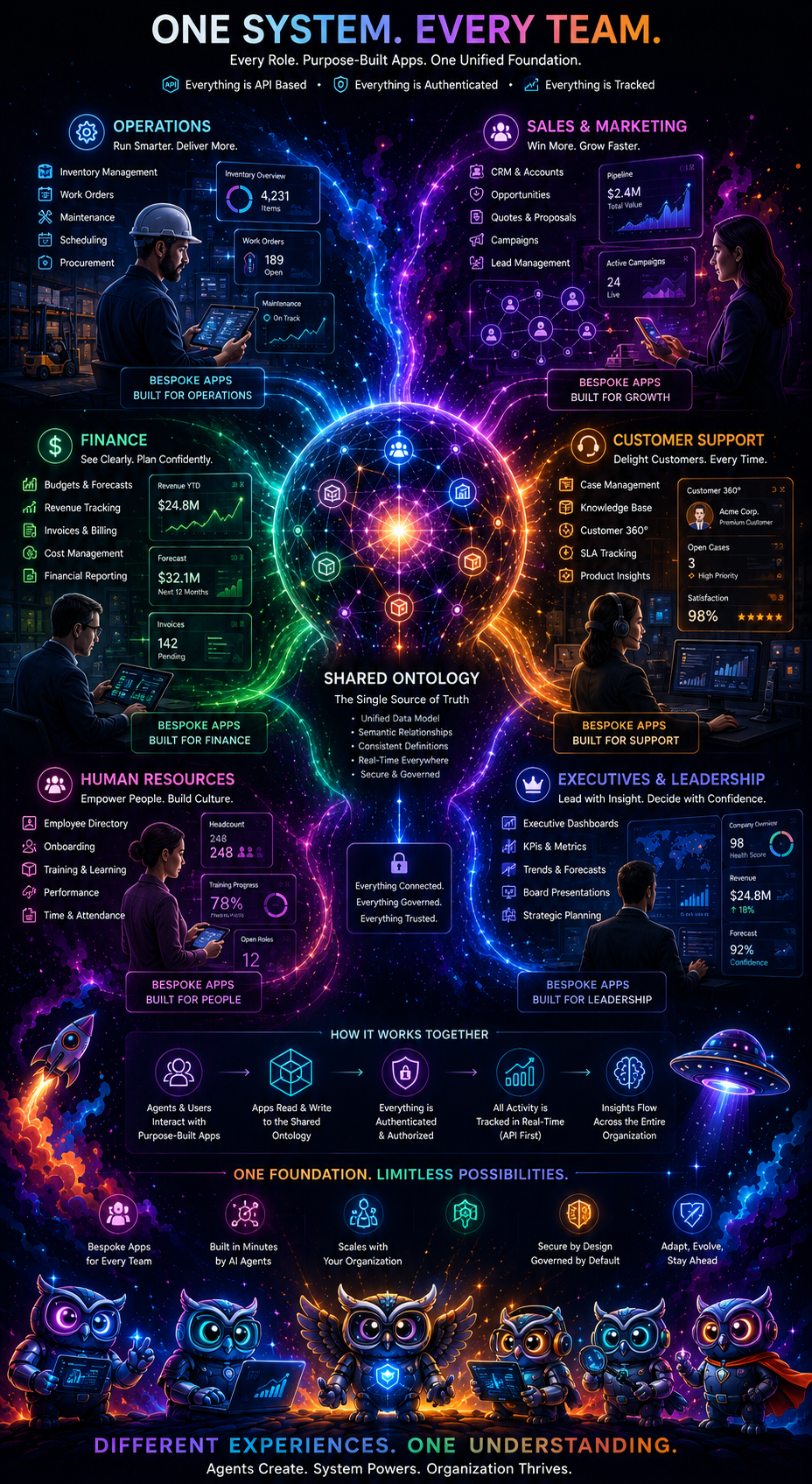
The system increases business function by sharing information through explicit authorization, ontological structure, API boundaries, and traceable workflows. The AI can help operate the apps, but the apps define what the AI is allowed to touch.
Full system map
The full diagram shows how identity, source systems, scoped APIs, ontological data, dashboards, agents, and audit trails fit into one controlled operating model.